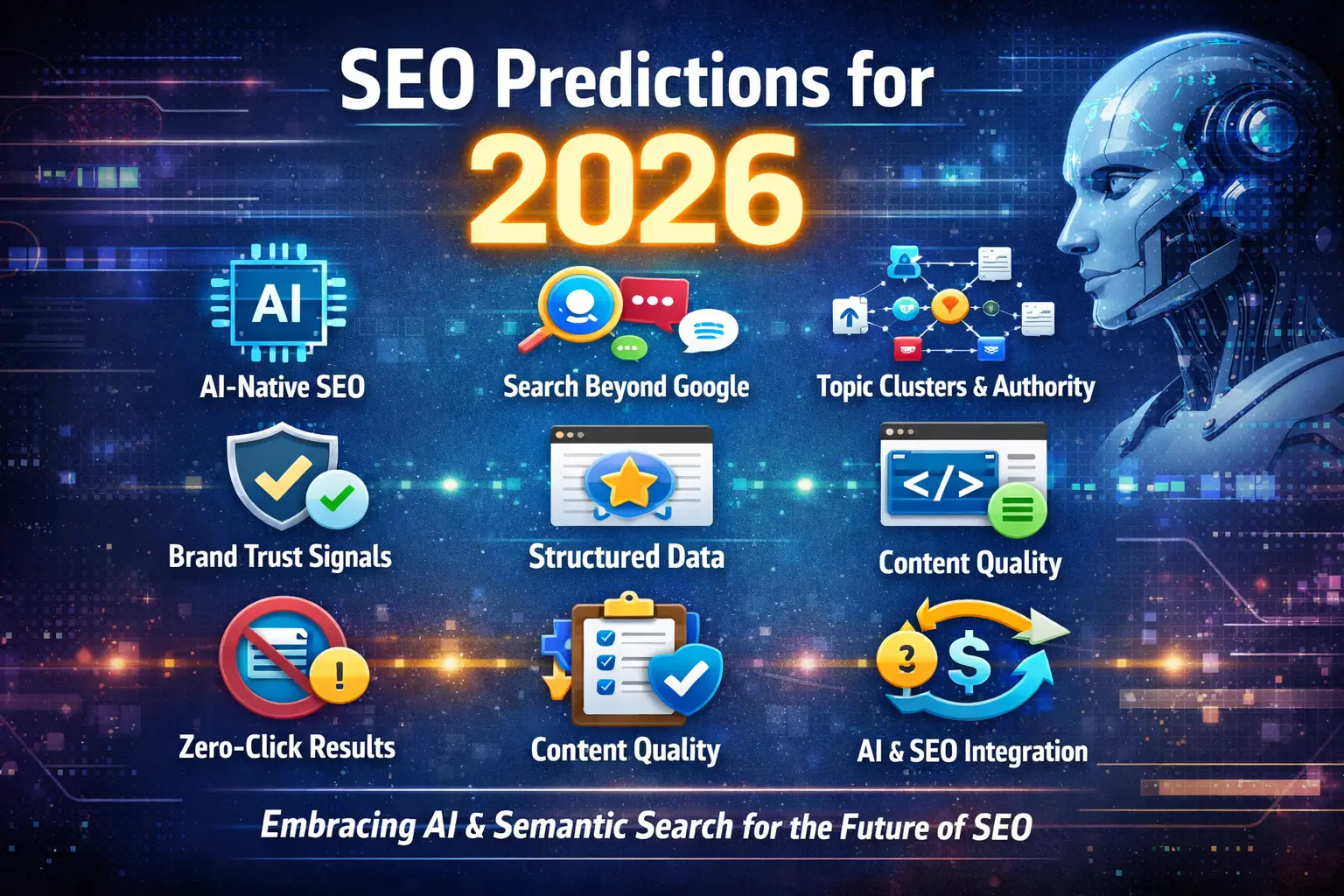
SEO predictions for 2026 are reshaping how marketers, businesses, and content creators plan their digital visibility. The rise of AI search and semantic search is fundamentally changing the rules of discoverability. No longer is SEO just about ranking in Google’s search results – visibility now means being understood, recognized, and referenced by advanced AI systems that interpret meaning, intent, and relationships between concepts. Today’s article breaks down the most important trends, expert insights, and practical actions you need to prepare for success in the coming year.
Why 2026 Is a Turning Point in Search
Search engines have evolved from simple keyword matching to advanced systems that understand context, intent, and meaning. SEO in 2026 will be shaped by three major forces:
- AI search adoption — AI assistants and generative interfaces increasingly replace traditional search results.
- Semantic search understanding — systems now interpret topics, entities, and connected meanings rather than isolated keywords.
- Content experience shifts — users expect depth, personalized relevance, and immediate answers.
What Is Semantic Search and Why It Matters
Semantic search refers to how search engines interpret the meaning behind a query rather than just matching specific keywords. This approach evaluates:
- Concepts and context
- Relationships between topics
- User intent and conversational nuance
In 2026, semantic search will be central to ranking well, because AI systems rely on meaning and entity connections when generating responses or selecting content to include in results. SEO that ignores semantic search risks being invisible to next‑generation search engines that value understanding over simple keyword patterns.
The Rise of AI Search Platforms
By 2026, AI search is expected to handle a growing share of search queries, shifting how discovery works. Some reports project that AI could process a significant portion of queries previously handled by traditional search engines.
AI search systems like ChatGPT, Perplexity, and Google’s AI Overviews are designed to synthesize answers and source information directly for users. This means the classic “ten blue links” model is giving way to generated responses that summarize insights in‑place.
For marketers, this shift means optimizing for presence in AI results, not just organic rankings.
Key SEO Predictions for 2026
1. SEO Is Becoming AI‑Native
Traditional optimization tactics like basic keyword stuffing are no longer enough. Instead, SEO in 2026 will hinge on how content is understood and used by AI search systems. These systems evaluate context, user intent, and semantic relationships in real time.
For example, semantic search helps AI infer deeper meaning from content, which means content must be structured around clear topics and useful answers.
2. Search Everywhere — Not Just Google
Search is no longer limited to search engines alone. People now discover information across:
- AI assistants
- Social platforms
- Q&A communities
- Video and audio searches
AI search systems pull from this entire ecosystem when answering queries, making omnichannel presence critical for SEO success.
3. Topic Clusters and Topical Authority Replace Keywords
Rather than focusing on individual keywords, SEO will center around topic clusters and entity authority. This means building deep, interconnected content that thoroughly covers subject areas so that AI search systems can match it to user queries effectively.
Semantic search thrives on content that reflects relationships and meaningful structures, which is why topic hubs are becoming essential.
4. Brand Signals and Trust Matter More
In an AI‑driven world, search engines and assistants weigh brand credibility higher than ever. Strong brand signals, consistent mentions, and trust indicators help AI systems decide which sources to reference in generated answers.
This shift means backlinks alone are no longer the dominant authority factor — brand reputation and trust often outweigh traditional link signals.
5. Structured Data and Markup Are Essential
Structured data helps search engines and AI systems better understand your content. Schema markup for articles, FAQs, products, and entities makes content more readable to semantic search algorithms, improving the chances of being included in rich results and AI answers.
6. Zero‑Click and AI Overviews Will Grow
AI search often delivers direct answers without users needing to click through to websites. As this “zero‑click” environment expands, SEO must pivot toward being cited in responses and AI summaries, not just ranking for clicks.
7. Content Quality Beats Content Volume
With AI systems optimizing for useful, original information, high‑quality content matters more than ever. Unique research, real data, expert insights, and comprehensive answers are rewarded by semantic search and AI search alike.
8. AI and SEO Budgets Converge
Organic and paid strategies are blending as AI platforms introduce monetization formats within the same conversational or generated search experiences. This fusion means SEO professionals need to integrate paid, organic, and AI strategies holistically.
How to Prepare Your SEO Strategy for 2026
To stay ahead in 2026, here are key action steps:
Optimize for Intent and Meaning
Focus on solving user intent with clear, contextualized topics rather than counting exact matched keywords.
Build Topic Clusters
Use semantic search principles to create interconnected content hubs that help AI systems understand your expertise.
Strengthen Brand Presence
Encourage consistent brand references, reviews, and authoritative signals across platforms.
Use Structured Data
Implement schema markup to make your content easily interpretable by AI search systems.
Monitor AI Search Performance
Track visibility beyond traditional rankings, including citations in AI summaries, engagement metrics, and topic authority.
Conclusion
SEO predictions for 2026 point to a transformative shift where semantic search and AI search redefine what it means to be visible online. Traditional rankings will always matter, but the future of SEO belongs to those who align content with meaning, authority, and user intent. By preparing for advanced AI‑driven search, focusing on trust signals, structured data, and high‑quality content, you position your website to thrive in a dynamic search landscape where answers matter more than ever.