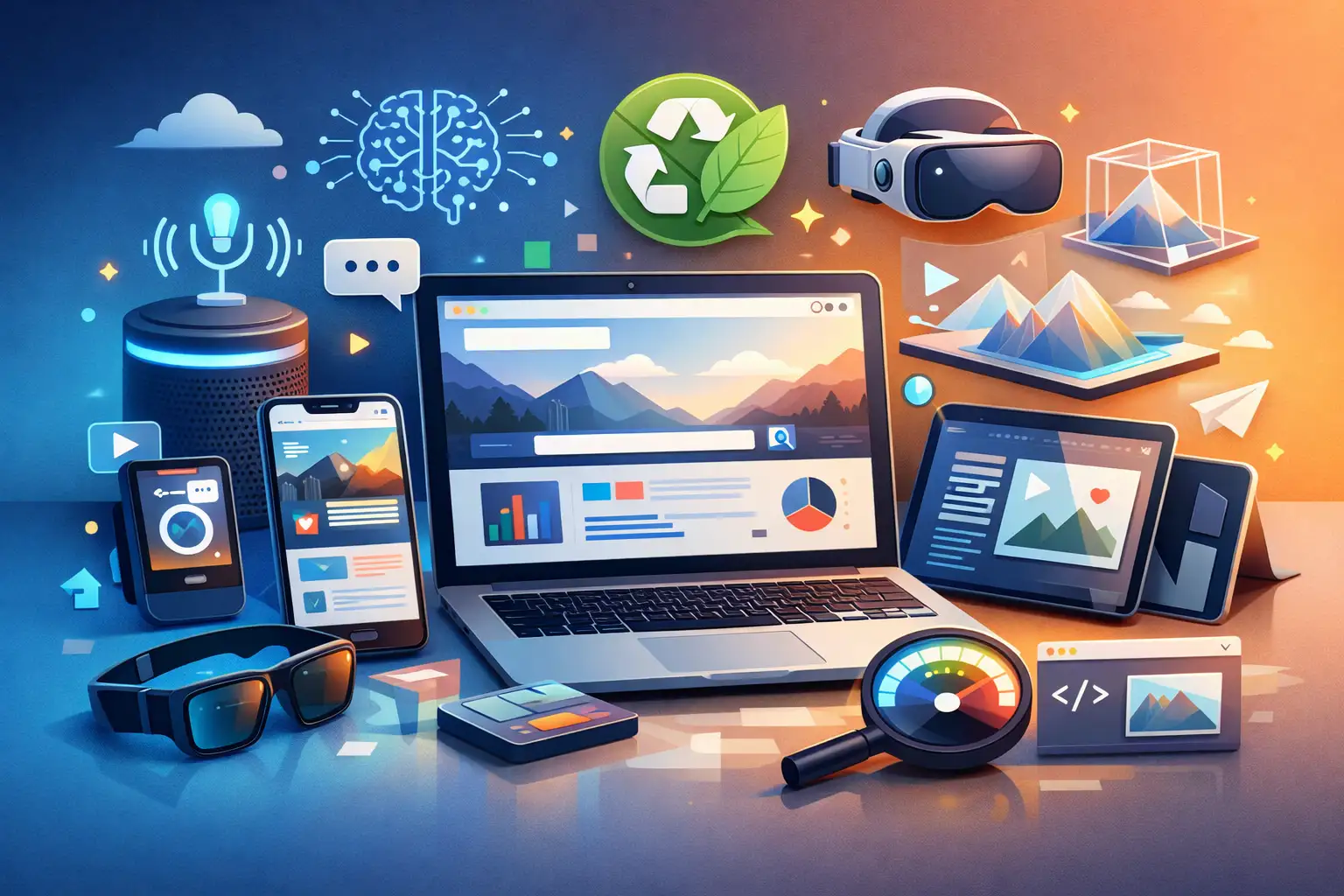
In 2026, website development trends are more dynamic, user-centric, and performance-driven than ever before. Modern websites must meet rising expectations for speed, accessibility, and seamless experiences on every device. Core principles like responsive design, mobile-first design, web performance, and accessibility dominate the evolution of the web — affecting both SEO and user engagement. This article explores each major trend, why it matters, and how you can apply it today.
What Are Website Development Trends?
“Website development trends” are evolving patterns and practices that shape how websites are built, optimized, and experienced by users and search engines. Trends reflect new technology, design standards, user behavior, and performance expectations. Staying current with these trends helps businesses maintain relevance, accessibility, and competitive visibility online.1. Responsive Design for Every Screen
Why It’s Essential
Responsive design means websites automatically adapt to all screens — from phones to foldable devices and desktops. In 2026, this goes beyond basic responsiveness to support context-aware layouts for diverse form factors.
What It Does
- Ensures seamless viewing on mobile, tablet, desktop, wearables, and foldables
- Improves engagement and reduces bounce rate
- Boosts SEO rankings due to mobile friendliness
Stats That Matter
- Nearly 90% of websites now use responsive design.
- Responsive sites show up to 11% higher conversion and 15% more mobile interaction.
Best Practice: Use fluid grids, CSS container queries, and flexible layouts to handle emerging device sizes.
2. Mobile-First Design Always Comes First
Mobile devices generate most global traffic — and in 2026, mobile-first design is no longer optional. Google and other search engines now index primarily mobile versions of websites, making mobile-first design a fundamental SEO priority.
What Mobile-First Design Means
- Design for mobile screens before desktop
- Thumb-friendly interfaces
- Faster mobile load times
- Clear, minimal navigation
Tip: Ensure CTAs, text, and interactive elements are easy to see and tap on small screens.
3. Web Performance: Speed = SEO + UX
Fast web performance remains one of the most crucial 2026 website development trends. Users expect pages to load in under 2–3 seconds, and slow sites suffer in both search rankings and engagement.
Why Web Performance Matters
- Improves SEO ranking via Core Web Vitals
- Reduces bounce rates
- Enhances conversions
Tactics to Improve Performance:
- Image optimization (next-gen formats like WebP)
- Code minimization (CSS/JS)
- Lazy loading visuals
- Prefetching frequently used resources
4. Accessibility Should Be Built-In
Accessibility ensures websites work for everyone — including users with disabilities. It’s no longer an afterthought; it’s a priority in 2026.
Accessibility Includes
- Screen reader support
- Keyboard navigation
- Proper color contrast
- Descriptive alt text for images
Why It Matters:
Accessible sites not only reach a wider audience but also gain SEO benefits, legal compliance, and improved user trust.
5. AI and Personalization
Artificial intelligence tools like ChatGPT and Gemini are reshaping web interactivity — powering chat assistants, personalized recommendations, and user-adaptive content. This trend boosts engagement and conversion potential.
Common AI Uses Today
- Dynamic content personalization
- Interactive chatbots
- Predictive search capabilities
Pro Tip: Integrate AI-driven features to make websites feel intuitive and responsive to individual users.
6. Voice & Conversational Interfaces
Voice user interface (VUI) and voice search are trending upward as more users interact with websites using speech. Incorporating voice navigation supports both accessibility and modern search behaviors.
Benefits
- Hands-free interaction
- Better usability for users with disabilities
- Stronger voice search SEO performance
7. Motion UI & Micro-Interactions
Interactive elements like subtle hover effects, smooth transitions, and feedback animations enhance engagement — without distracting from core content. Carefully executed motion UI can boost conversions and user satisfaction.
Best Practice: Use motion to guide attention — not to overwhelm.
8. Sustainability and Eco-Friendly Web Design
Eco-friendly design optimizes energy use and reduces carbon footprint — from hosting to code efficiency. Lightweight websites not only load faster but also consume less energy.
Impact: Faster sites, cost savings, greener digital presence.
9. AR/VR & Immersive Features
AR and VR elements are no longer future tech — they’re practical tools for virtual try-ons, interactive tours, and immersive product demos. These features elevate user experience and help sites stand apart visually.
Conclusion
Website development in 2026 is about speed, accessibility, adaptability, and intelligent design. Modern sites must be fast, responsive, mobile-first, inclusive, and engaging. Trends like enhanced responsive design, web performance, accessibility, and mobile-first design aren’t just buzzwords — they’re essential for SEO success and delivering world-class user experiences. By embracing these developments, you’ll future-proof your website and boost engagement, rankings, and conversions.