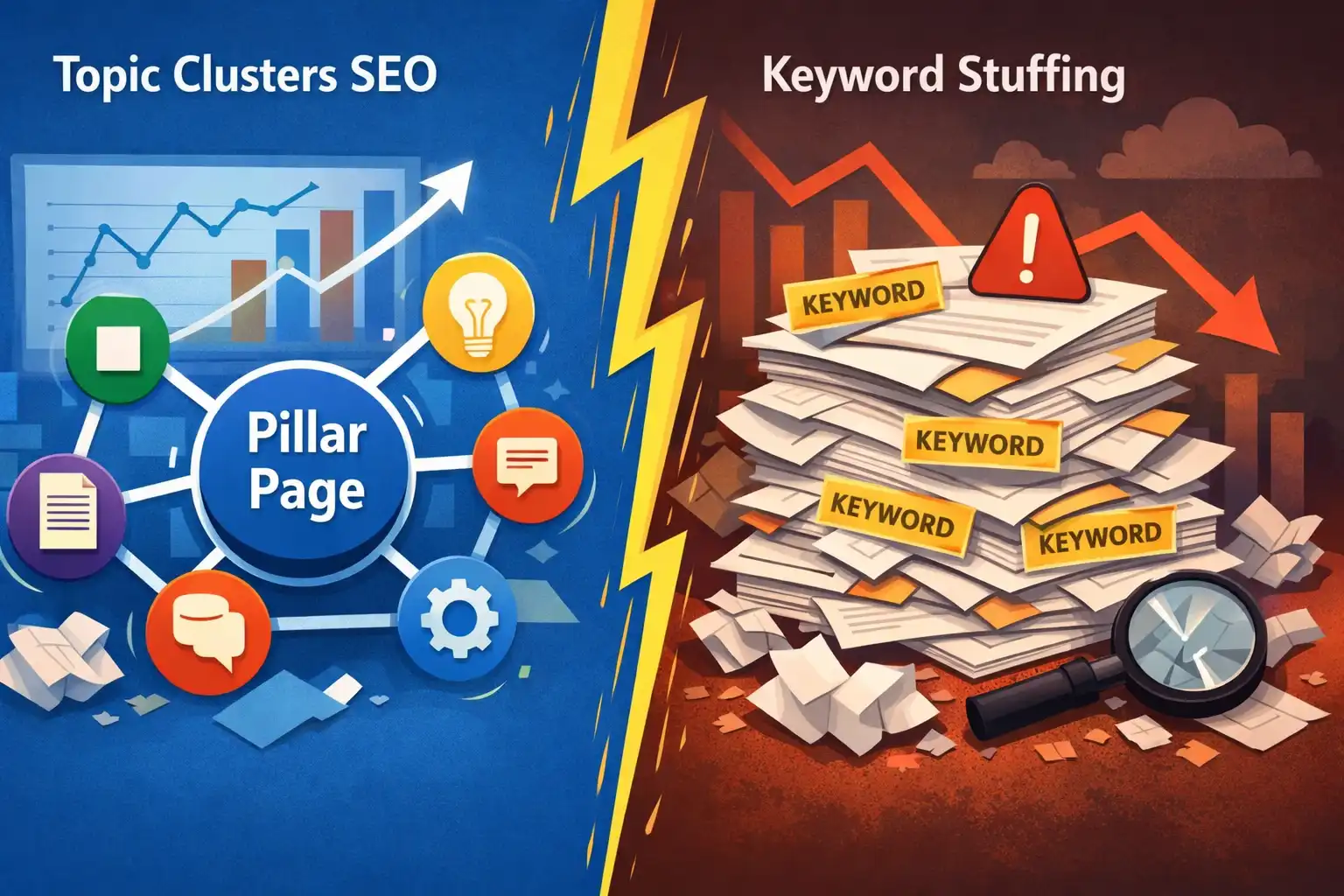
In 2026, SEO isn’t about cramming keywords onto a page. The era of keyword stuffing is over, replaced by intelligent, interconnected content structures that help users and search engines truly understand your site. The strategy driving this change? topic clusters SEO — a framework that boosts authority, improves search performance, and aligns with advanced search algorithms focused on user intent and relevance.
This article will explain why topic clusters SEO beats keyword stuffing in 2026, using the latest industry insights on SEO trends and Google’s quality standards like E-E-A-T. You’ll learn how topic clusters work, why they matter, and how to implement them effectively.
What Is Topic Clusters SEO?
Topic clusters SEO is a content strategy that structures your website around a central pillar topic and related subtopic pages, all tied together with internal links. Instead of creating isolated pages optimized for one keyword each, you create a network of content that covers a subject comprehensively. This means users and search engines see your site as a rich resource on a topic — not just a collection of pages scattered across different keywords.
Core Elements of Topic Clusters SEO
- Pillar Page: A detailed, authoritative page covering a broad subject.
- Cluster Content: Supporting pages diving into specific subtopics.
- Internal Linking: Logical links connecting pillar and cluster pages.
This structure tells Google that your site thoroughly covers a topic — which improves rankings for many related search queries, not just one keyword.
Why Keyword Stuffing No Longer Works
Keyword stuffing — the practice of repeating a keyword over and over to manipulate search rankings — was once standard practice. Today? It harms your SEO. Modern search engines evaluate content quality, context, and user satisfaction, making keyword stuffing ineffective and even risky.
Here’s why keyword stuffing fails:
- Search engines prioritize context & intent, not repetition. Algorithms like Google’s BERT and MUM assess meaning and conversational searches, making keyword stuffing irrelevant.
- Penalized for over-optimization. Pages that unnaturally repeat keywords lose rankings and trust.
- Poor user experience. Stuffed content reads awkwardly and often fails to answer real user questions.
In contrast, topic clusters SEO provides clarity, depth, and value — signals search engines love.
How Topic Clusters SEO Works Better
1. Aligns With User Intent
Search engines now focus on why someone searches, not just what they type. Topic clusters anticipate multiple related questions a user may have and deliver structured answers in one place.
This boosts engagement, decreases bounce rates, and improves rankings — something keyword stuffing can’t do.
2. Improves Content Visibility Across Search Queries
A single topic cluster can rank for many long-tail phrases and variations naturally. Because related cluster pages link back to one pillar page, Google understands the content hierarchy and relevance better than isolated keyword pages.
In 2025 data showed clusters generate up to 30% more organic traffic and hold rankings longer than traditional keyword pages.
3. Builds Topical Authority With E-E-A-T
Google’s quality guidelines emphasize Experience, Expertise, Authoritativeness, and Trustworthiness (E-E-A-T). Topic clusters SEO naturally supports these:
- Experience: Real, detailed insights across multiple related pages.
- Expertise: Deep content showing subject mastery.
- Authoritativeness: Users and search engines see your site as a go-to resource.
- Trustworthiness: Clear structure and relevance build credibility.
Topic clusters demonstrate authority through comprehensive coverage — something keyword stuffing can never achieve.
4. Reduces Keyword Cannibalization
Keyword cannibalization happens when multiple pages compete for the same keyword. Topic clusters solve this by organizing content around themes, so each page targets a specific intent within the subject framework.
Real-World Benefits of Topic Clusters SEO
Better Rankings Across Multiple Queries
Rather than ranking for one target phrase, topic clusters help your site appear for dozens of related search terms. Content naturally includes semantic variations and long-tail queries, improving overall visibility.
Higher User Engagement
Users stay longer on sites where they find answers to several related questions in one place. This behavior signals relevance and quality to search engines — boosting SEO performance.
Stronger Internal Linking Structure
Interlinked cluster content distributes SEO value throughout your site. This informs search algorithms about topic relationships and strengthens overall site relevance.
Easier Content Updates & Expansion
Once you adopt topic clusters, updating or adding new subtopics becomes strategic and guided — rather than randomly optimizing more keywords.
Step-by-Step Guide to Building Effective Topic Clusters
To succeed with topic clusters SEO, follow these key steps:
1. Research Broad Topics
Use tools like Google Search Console, keyword research tools, and user feedback to find high-value topics relevant to your audience.
2. Create an Authoritative Pillar Page
Your pillar should be comprehensive, covering the core topic thoroughly and linking to cluster pages. Balance depth and readability.
3. Plan Cluster Content Based on Intent
Identify related subtopics and long-tail searches that naturally feed into the pillar’s theme. Each cluster page should answer distinct queries.
4. Use Strategic Internal Linking
Link every cluster page back to the pillar, and where relevant, cluster pages to each other, using meaningful anchor text.
5. Update Content Regularly
Refresh your clusters as new information or user queries emerge. This signals ongoing relevance to search engines.
Conclusion
In 2026, topic clusters SEO isn’t just a trend — it’s the foundation of effective search optimization. Modern search engines reward depth, relevance, and authority over outdated methods like keyword stuffing. Topic clusters help you:
- Answer user intent comprehensively
- Build topical authority aligned with E-E-A-T
- Rank for more keywords without forcing them
- Improve site structure and engagement
If your SEO strategy still relies on keyword stuffing, it’s time to shift focus to topic clusters SEO to stay competitive, boost organic traffic, and build lasting authority in your niche.