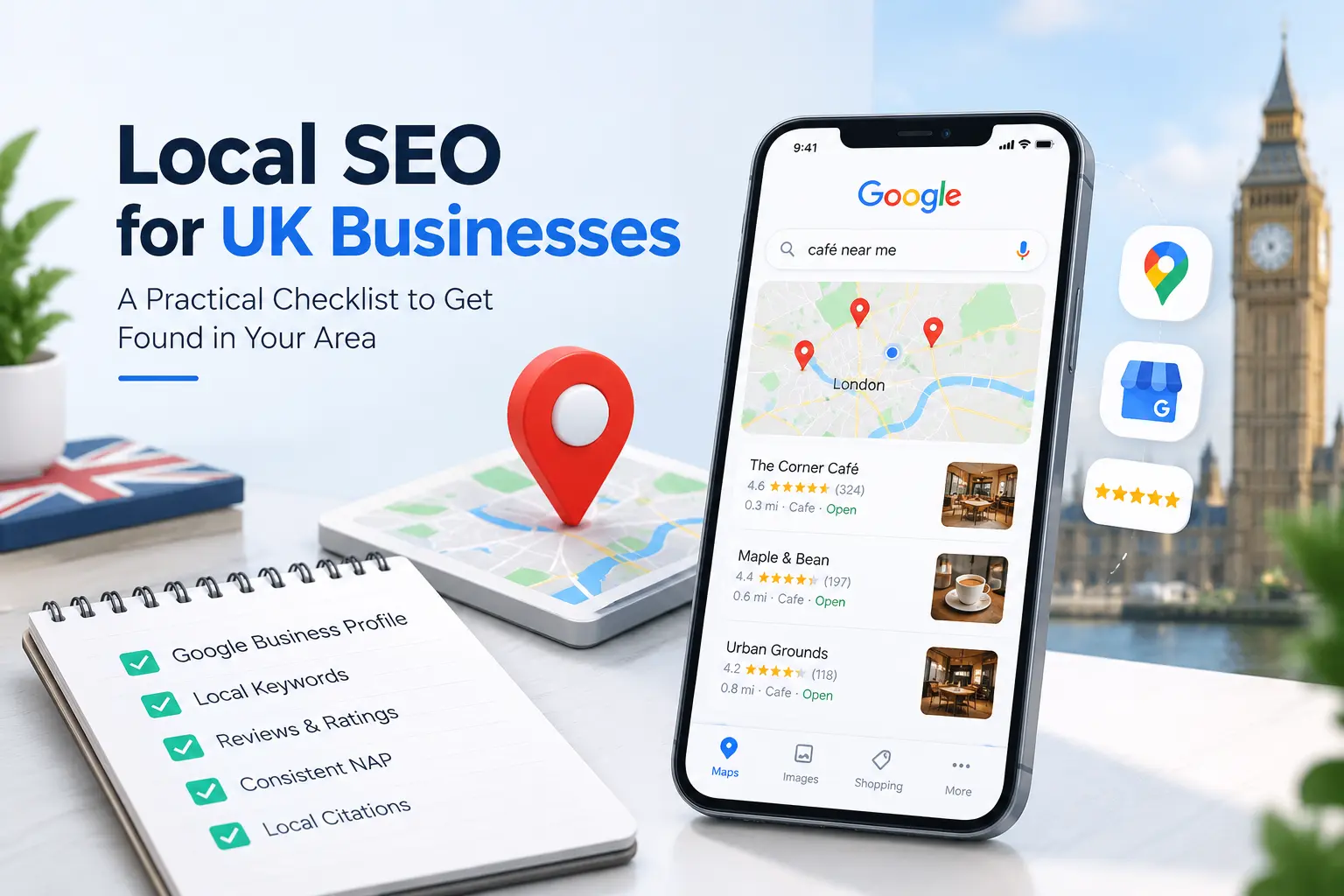
Most UK customers start their search for local services on Google. Whether they type “electrician in Croydon” or “café near me,” the results that appear first are often the map listings, not the traditional website links. If your business isn’t showing there, you’re handing customers to competitors. This checklist will help you put that right.
Why Local Search Matters for UK Businesses
Local searches usually show strong buying intent. The person is nearby, they need something now, and they are ready to call, visit, or book. That makes local SEO one of the most cost-effective ways for small and medium-sized UK businesses to attract customers, especially compared with paid advertising.
The Local SEO Checklist
- Claim your Google Business Profile. Verify it and complete every field, including opening hours, services, and a clear description of what you do.
- Pick the right categories. Your main category should describe your core service, not a general label.
- Use your real details. Make sure your business name, address, postcode, and phone number match your website exactly.
- Add genuine photos. Show your premises, your team, and examples of your work.
- Collect reviews consistently. Send a direct review link after each completed job or sale, and reply to every review.
- List your business on trusted directories. Beyond Google, consider Bing Places, Apple Business Connect, Yell, and respected directories in your own industry.
- Optimise your website pages. Mention your town or area in page titles, headings, and body text, and add a contact page with your address and a map.
- Make your site mobile-friendly and fast. Most local searches happen on phones.
UK-Specific Tips
- Use your postcode and local area names. People often search by neighbourhood or borough, so mention the places you actually serve.
- Show a UK phone number. A local landline or recognisable number builds trust.
- Match your registered details. Keep your trading name consistent with how customers know you.
- Consider your service area. If you travel to customers rather than welcome them in, set up your profile as a service-area business.
A Simple 30-Day Local SEO Plan
Week 1: Foundations
Claim and verify your Google Business Profile, then check that your business details are identical across your website and social profiles.
Week 2: Listings and Content
Submit your business to the main directories and update your website’s title tags and contact page with local information.
Week 3: Reviews
Ask recent customers for reviews and respond to any existing ones. Create a simple routine so this becomes automatic.
Week 4: Measure and Improve
Review your Business Profile insights, check which searches bring people to you, and note what to improve next month.
Mistakes to Avoid
- Using a virtual office or a false address to appear in a different town.
- Adding extra keywords to your business name.
- Buying reviews or asking friends and family to post fake ones.
- Letting your opening hours go out of date.
Frequently Asked Questions
Is local SEO worth it for a small business?
Yes. It targets people who are already searching for what you offer in your area, and much of the work is free to do.
How often should I update my Google Business Profile?
Review it at least once a month. Update hours for bank holidays, add new photos, and post news or offers.
Ready to Be Found Locally?
Local SEO is a steady process, not a quick fix. If you’d rather have a specialist handle it, our team in London can help. Take a look at our SEO services or contact us to talk through your goals.